Professor Winnie Mak (second from left, front), Dr Apesta Chung (back, third from left) and Dr Alan Tong (first from right, front) with their TourHeart+ project team
Amid global efforts to elevate mental health as integral to well-being—echoing the United Nations’ focus on Sustainable Development Goal 3—Hong Kong faces acute challenges. One in seven residents experience common mental disorders such as depression or anxiety, yet public psychiatric wait times often exceed a year, and only about 25% of those affected seek help. This underscores a critical need for accessible, stigma-free pathways to support. In this landscape, TourHeart+ emerges as a compassionate and innovative digital ally.
Led by Professor Winnie Mak of CUHK’s Department of Psychology, this online platform transforms mental wellness with user-centered self-help resources such as digital mental health interventions, interactive chatbots, and a supportive online community, promoting stigma-free, accessible support through meaningful engagement. By empowering users to cultivate self-care habits and a supportive community for exploring mental health, the platform extends its reach beyond personal journeys, contributing to a cultural shift toward proactive mental health awareness and advocacy in schools, workplaces, and families.
The advent of TourHeart+
Launched in 2017 with a vision to guide individuals in exploring their emotional well-being, TourHeart+ (‘to our heart +’) has evolved into one of the city’s most innovative and vibrant mental health ecosystems. It benefits over 59,000 users, including college students, working emerging adults, and members of the wider public.
The digital platform consists of evidence-based content, primarily based on mindfulness and cognitive behavioral therapy, and a generative AI chatbot, delivering safe, personalized mental health support to a wide audience.
‘Our core mission is to make mental health accessible and relevant for everyone, not just those with clinical diagnoses,’ explains Professor Mak. ‘We saw how most interventions were aimed at mental illness symptom reduction, but there was a critical gap in prevention and self-management––tools that could help the general population build resilience before crisis hits’. Mak continues, ‘Mental health is a fundamental right and basic need that should be accessible to all. Whether you are experiencing distress or not, TourHeart+ provides a range of tools for you to incorporate self-care into your daily routine.’
The urgency is clear. More than 52,670 people accessed public psychiatric services in Hong Kong for the first time between October 2024 and September 2025, and waits for individuals with stable conditions can reach up to two years. This situation is compounded by limited bridging options and the high cost of private care.
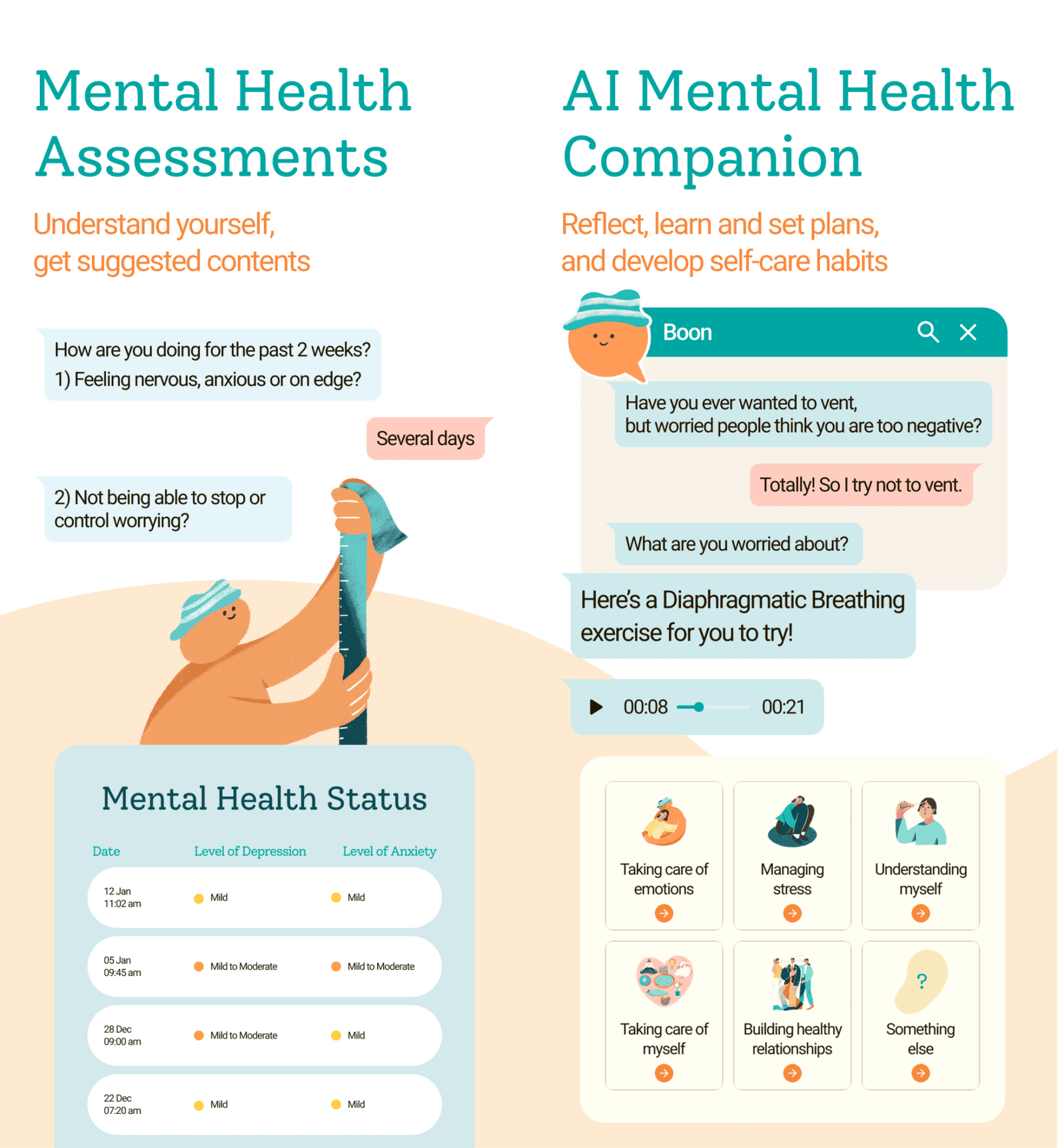
TourHeart+ users gain insights through self-assessments and an AI companion that tracks emotional well-being, provides tailored stress relief exercises, and supports self-care planning for a healthier, more self-determined life
A platform rooted in evidence
Registered TourHeart+ users start with a tailored mental health assessment that takes about 10 minutes to complete, assessing common symptoms of depression and anxiety. Content is then recommended based on the results. AI mental health companion, self-guided psychological interventions and mini modules developed with clinical psychologists are accessible via a mobile-responsive interface.
Unlike many commercial mental health apps with doubtful empirical grounding, the courses, practices, and tools offered on the TourHeart+ platform have been tested through rigorous academic research, including randomized controlled trials (RCTs), to verify its effectiveness. The platform is developed with empirical support and ongoing clinical oversight to ensure safety. In addition, its overall design is user-centered and grounded in research on user experience and interface design.
‘Our product team goes beyond designing technology. They collaborate closely with users and researchers to ensure that every feature is rigorously tested and refined,’ explains Dr Apesta Chung, the team’s project manager.
The evidence speaks for itself: A recent RCT involving 285 adults revealed that just ten days of engagement with the TourHeart+ rule-based chatbot led to significant improvements in self-care intentions and mental health literacy, compared to a waitlist control group. Engagement rate was better among users who received timely reminders to complete their activities, which boosted completion rates by nearly 50%.
Chatbots: humanlike empathy, realistic boundaries
The chatbot avatars ‘Boon’, use local Cantonese dialogue and relatable metaphors to bring warmth and relevance. ‘We want users to feel seen and understood, not managed or diagnosed,’ adds Professor Mak. ‘The use of language, tone, and even interactive art elements is all geared towards cultivating trust, rapport, and self-efficacy’.
This culturally attuned design not only lowers barriers for those hesitant to seek support due to stigma but also fosters broader social benefits, such as increased self-understanding and interpersonal sharing and support among diverse users, which can enhance mental well-being and community-wide mental health literacy. By normalizing conversations around emotional and psychological vulnerabilities in a highly stigma social context like Hong Kong, these features help to produce a ripple effect, empowering users to attend to their inner needs and advocate for their mental health.
The current AI chatbot system of TourHeart+ employs motivational interviewing approach to facilitate user reflection and stimulate intrinsic motivation. This approach encourages individuals to explore coping strategies for their emotional challenges and set achievable behavioral goals for mental health self-care. By supporting autonomy in the change process, the system enhances users’ self-efficacy and intention to change and empowers them to take charge of their mental well-being.
‘Every interaction is designed to foster engagement, prompting users to reflect, set personal goals, and form healthy habits. The chatbot acts as a gentle guide rather than a substitute therapist,’ says the team’s research lead Dr Alan Tong.
In the next phase of the project, the team is working to enhance the chatbot’s ability to deliver truly dynamic, personalized interactions. The enhanced chatbots will be able to interpret users’ conversational entries, adapt to their evolving needs, and co-create new intervention modules with direct user participation, in Cantonese, English, and Mandarin.
Prioritising ethics and safety
Recognising the risks that come with AI-driven support––data leaks, algorithmic ‘hallucinations’, and ethical ambiguities––the team has engineered robust safeguards into every layer. Sensitive personal information is deliberately excluded from collection, and all data flows are subject to strict ‘zero trust’ protocols and ongoing monitoring by a multidisciplinary tech team.
‘We prioritize ethics and safety,’ says Dr Chung. ‘Our chatbots are designed to empower self-care, not to provide clinical therapy. We always have a human-in-the-loop approach for crisis detection, with automated red flags and referrals to professional counseling only when needed.’
This focus on ethical transparency and privacy is rare among digital mental health platforms, and the team frequently collaborates with top universities, mental wellness partners (including CUHK’s Wellness and Counselling Centre), and sector experts to update safety benchmarks and ethical best practices.
Community-based co-creation
The platform’s 59,000 registered members, ranging from undergraduates to retirees, engage not just with chatbot modules, but also with interactive digital journeys (Amazing Adventure Against Stigma and Journey Across the Storyland), community forum and regular live mindfulness events.
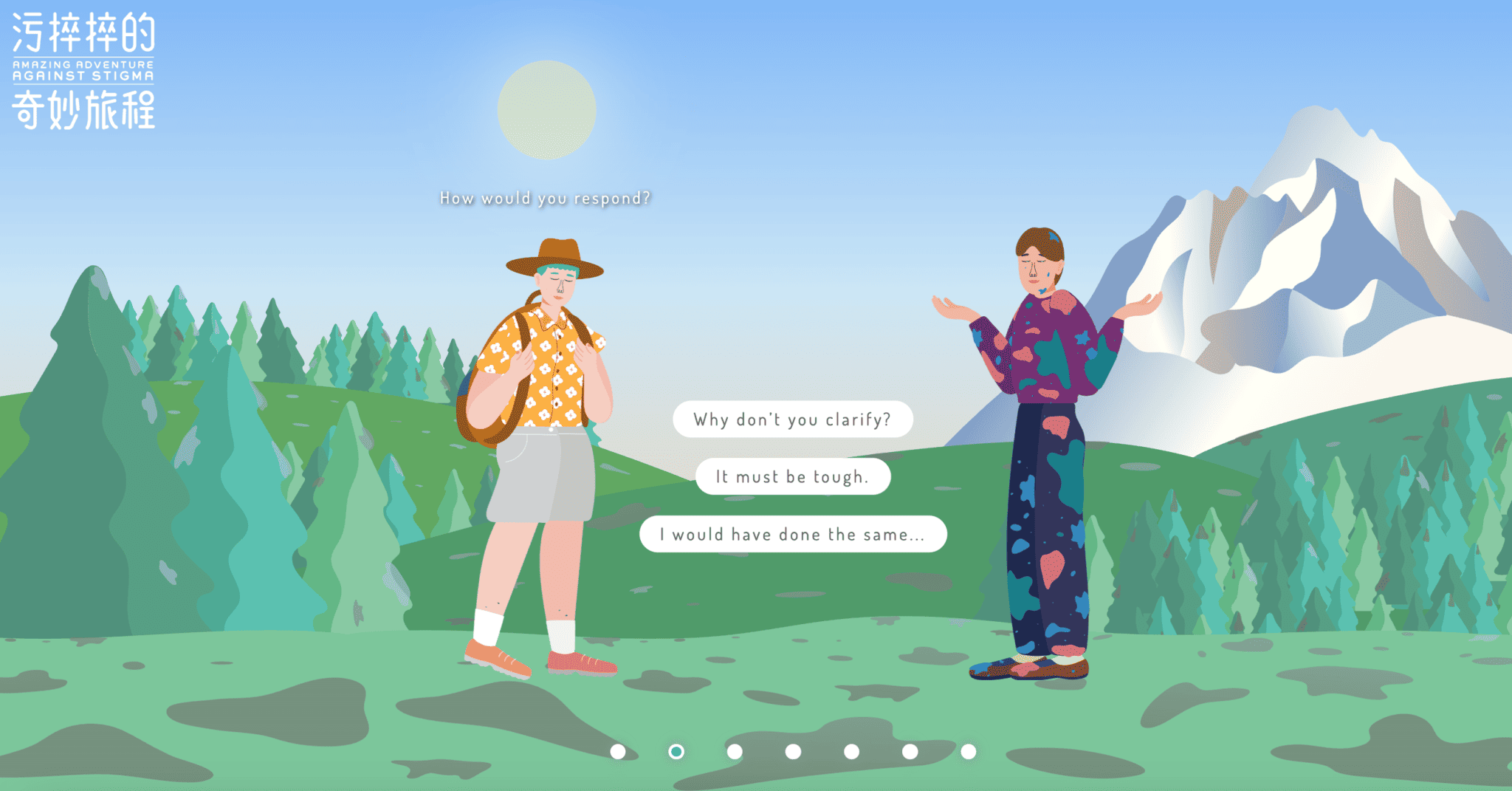
The Amazing Adventure Against Stigma is an online interactive journey that introduces mental illness stigma and the difficulties faced by people with lived experience.
‘Our vision is an inclusive mental health ecosystem,’ says Professor Mak. ‘We encourage mutual support, narrative sharing, and group practice, recognising that sustainable mental health is not just an individual project but a social movement.’
The project runs regular participatory research cycles, co-designing new contents with local as well as non-local students. ‘We want our interventions to resonate across cultures, ages, and contexts, not just among tech-savvy users,’ notes Dr Tong.
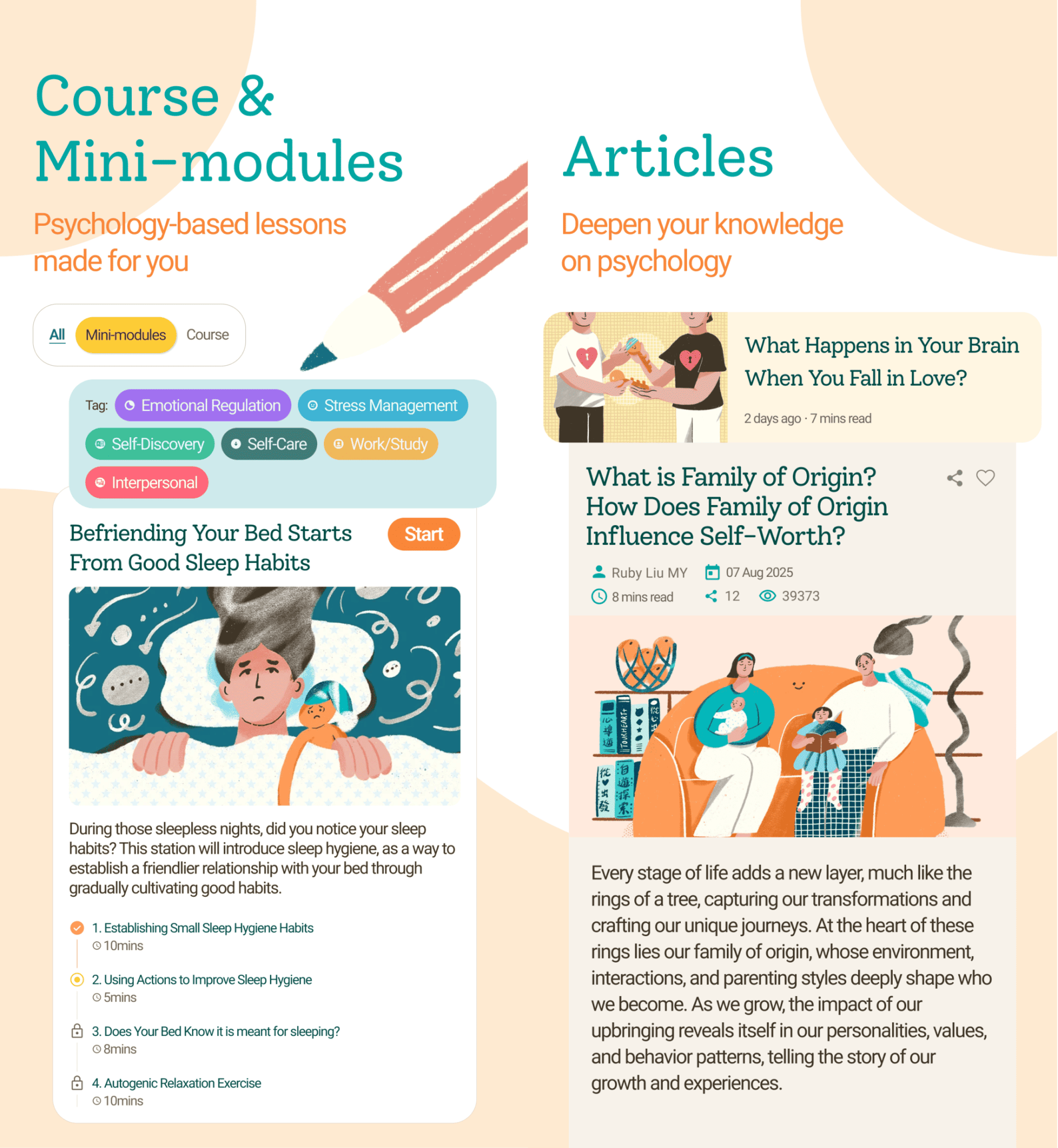
TourHeart+ invites users to dive into engaging psychology articles and interactive-courses
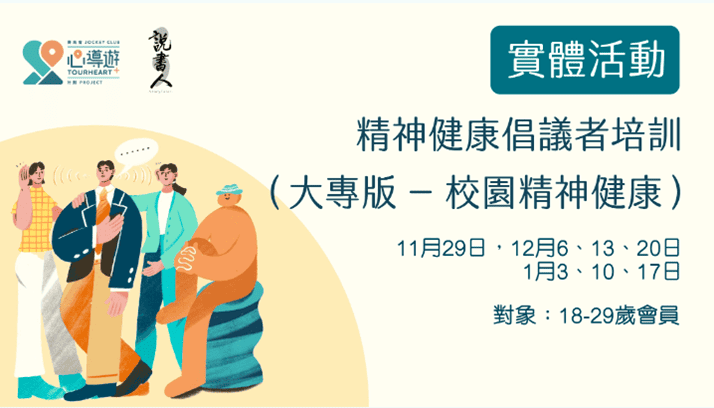
Besides organising interactive group events including mindfulness and cognitive behavioral therapy sessions, the project team also conducts face-to-face Mental Health Impact Generation Training (College Student Edition) to empower young individuals to advocate for their mental well-being
Every person—rather than professionals alone—can be a powerful catalyst for lasting change. Through the Mental Health Impact Generation Training (College Student Edition), the TourHeart+ team has engaged young people aged 18–29 in a transformative program. In dynamic workshops and creative collaborations with instructors and peers from the co-organizer of TourHeart+—StoryTaler, participants will co-design impactful public education materials—igniting advocacy for mentally healthy campuses and nurturing more inclusive, empathetic learning environments.
These efforts have empowered trainees as confident change-makers, amplifying student-led mental health movements across Hong Kong universities. By dismantling stigma, strengthening peer support networks, and influencing institutional policies to prioritize mental well-being, the initiative aims to spark a broader ripple effect, driving cultural shifts and systemic progress in mental health.
Looking ahead, the team is seeking collaborations with local colleges and universities, community organizations and corporations, and international partners. ‘We hope to empower not only individuals, but to collaborate with organizations and governmental bodies to adopt best-practice mental health models to that the entire community can be conducive to mental wellness,’ emphasizes Professor Mak.
‘Research and service must go hand in hand. Technology alone isn’t the answer. With thoughtful design, rigorous evaluation, and a commitment to genuine human connection and structural change, we can make mental health support truly accessible, sustainable, and empowering.’
Jenny Lau is an editor in the Communications and Public Relations Office, The Chinese University of Hong Kong.