Curriculum
111 related courses were offered in the 2024–25 academic year.
Policies
CUHK, as a socially conscientious institution, has implemented the Social Responsibility and Sustainable Development Policy. The University is dedicated to realizing the University Social Responsibility (USR) objectives that align with the United Nations’ Sustainable Development Goals, particularly that of attaining carbon neutrality. CUHK’s determination to meet this goal underscores its commitment to combatting climate change and lessening its carbon footprint.
Energy consumption is a primary contributor to greenhouse gas emissions. CUHK has developed an Energy Efficiency and Conservation Policy and Energy Efficiency and Conservation Guidelines to promote responsible and efficient energy usage by all campus users. By deploying energy-efficient infrastructure and constantly promoting energy-saving behaviours by all staff and students of the University, CUHK aims to curtail energy consumption and carbon emissions.
Air travel is known to have a significant carbon footprint, making it a major contributor to climate change. CUHK’s Carbon Offsetting Encouragement Policy is designed to encourage all its staff members to offset carbon emissions from their air travel by buying carbon offsets to support projects that reduce carbon emissions in other ways.
Research
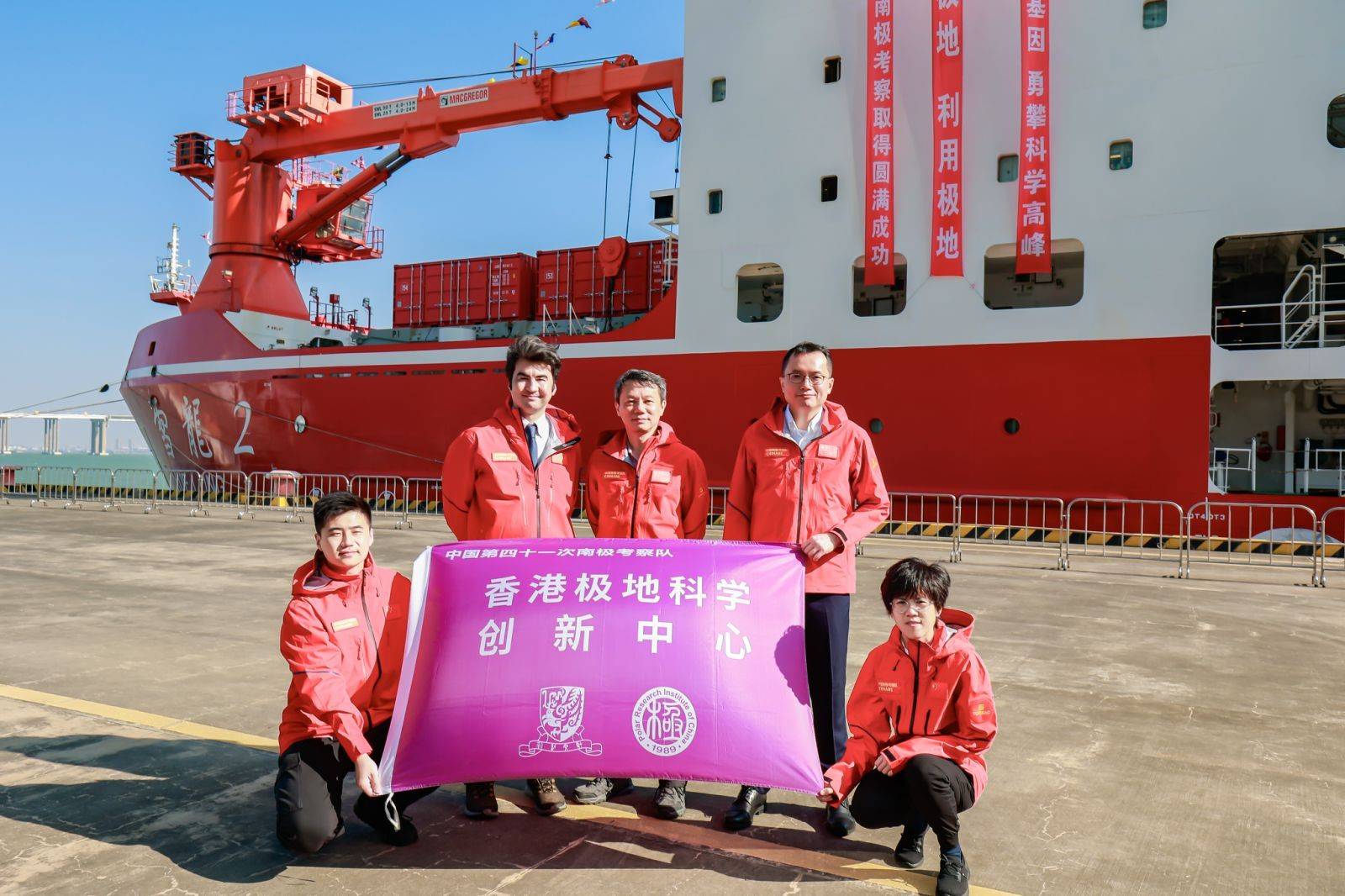
The Xuelong 2 is China’s first domestically built polar icebreaker and scientific research vessel. It is dedicated to conducting scientific expeditions to study climate change. Jointly organized by China’s Ministry of Natural Resources and the People’s Government of Guangdong Province in Nansha, Guangzhou, China’s 41st Antarctic expedition set sail on 1 November, 2024. CUHK organised Hong Kong scientists to join the farewell ceremony for the expedition team. Six scientists from Hong Kong universities joined this expedition, the first group of Hong Kong scientists to participate in China’s polar exploration. Four of these scientists are from CUHK: Professor Alex Chow Tat-shing, Chairman, Department of Earth and Environmental Science; Professor Martin Tsui Tsz-ki, Associate Professor, School of Life Sciences and Department of Earth and Environmental Science; Professor Liu Lin, Associate Professor, Department of Earth and Environmental Science and Professor Michael Pittman, Assistant Professor, School of Life Sciences. Their participation marks the first step in Hong Kong’s participation in national academic polar research, and CUHK expects to play an increasingly important role in both national and global polar research in the years ahead.
Severe weather events such as typhoons, flooding and wildfires are becoming more frequent and more threatening as a result of climate change. Tropical cyclones, in particular, are becoming more intense globally. In Hong Kong alone, five No. 10 tropical cyclone warning signals were issued by the Hong Kong Observatory in the fifteen years since 2010, compared with only two during the period from 1981 to 2010. This serves as a salutary reminder of the importance of enhancing disaster preparedness capacity and response at all levels via research-informed and evidence-based policy advocacy, training and drills.
The Collaborating Centre for Oxford University and CUHK for Disaster and Medical Humanitarian Response has been providing medical humanitarian assistance internationally since 2011. CUHK is the Asian partner in an international research team led by the University of Oxford to conduct an eight-year multidisciplinary international global health research project: ‘After the end: lived experiences and aftermaths of diseases, disasters, and drugs in global health’. CUHK will continue to consolidate its status as an international centre of expertise in disaster and medical humanitarian response research, education and policy consultation, and to help build capacity among researchers and practitioners in the Asia-Pacific region to conduct research and provide local and international medical humanitarian assistance. It will also seek to elevate Hong Kong as a leader in global disaster risk reduction policy.
Commitment to carbon neutrality
In its Strategic Plan 2021–2025, CUHK pledged to respond to the climate emergency by becoming carbon neutral. To achieve this goal, CUHK has implemented a series of new decarbonization measures, including expanding renewable energy generation, launching an Energy Conservation Incentive Scheme for Student Hostels, and promoting green mobility. We have also established schemes such as the Green Office Programme and the Energy Efficiency Implementation Fund, which engage the university community in the pursuit of climate action.
Local education programmes on climate change
As a leader in sustainability, CUHK houses the Jockey Club Museum of Climate Change (MoCC), the world’s first museum of its kind, and co-hosts the Hong Kong chapter of the Sustainable Development Solutions Network (SDSN Hong Kong), a United Nations initiative to mobilize knowledge institutions to promote practical problem-solving for sustainable development.
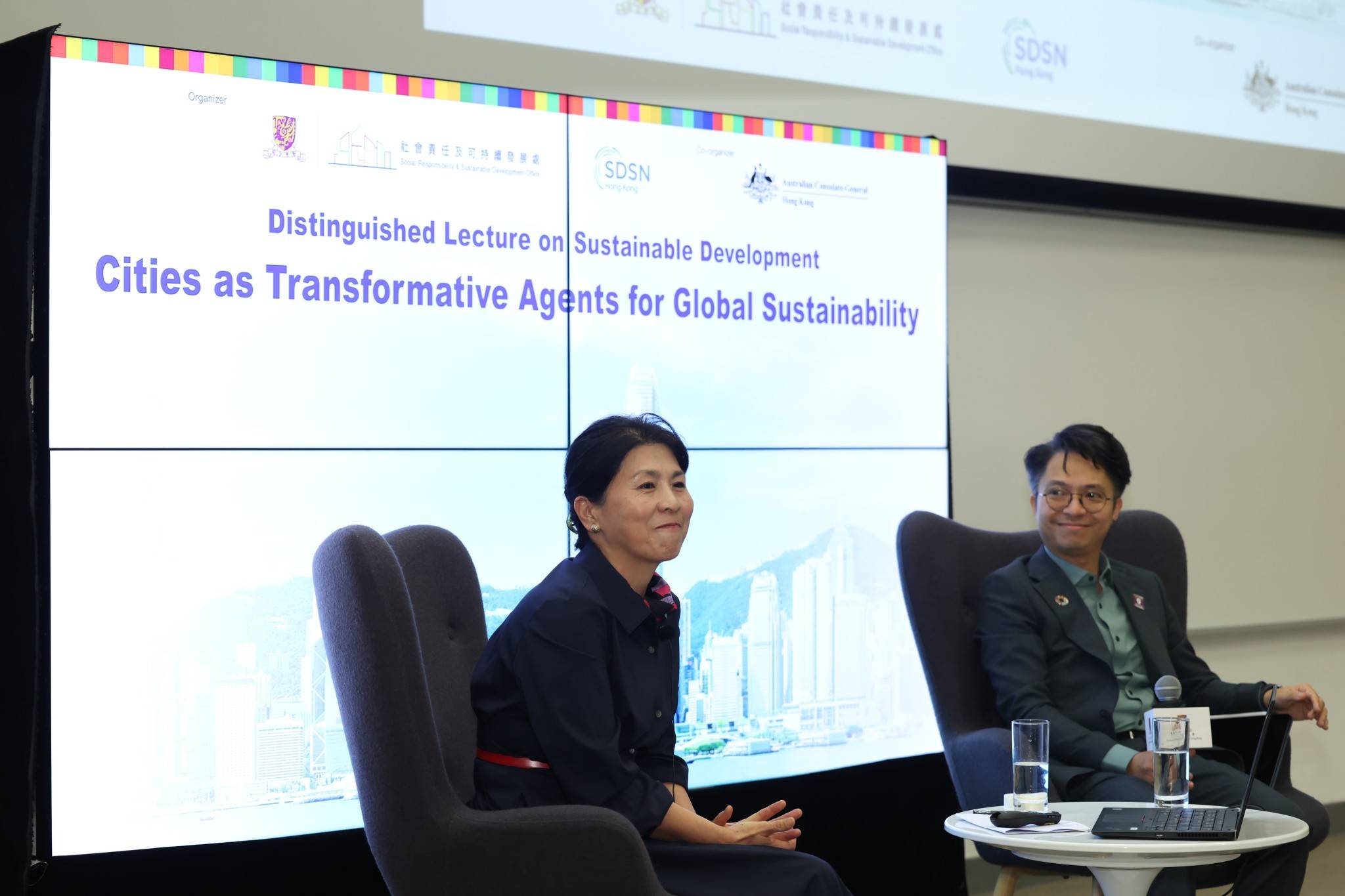
On 27 June 2025, CUHK hosted the ‘Distinguished Lecture on Sustainable Development 2025’ titled ‘Cities as Transformative Agents for Global Sustainability’ by Professor Xuemei Bai, who is the Distinguished Professor, Urban Environment and Human Ecology at the Fenner School of Environment and Society, The Australian National University. This event marked the first collaboration between SDSN Hong Kong and the Australian Consulate-General Hong Kong, fostering cross-regional dialogue on sustainability. The lecture explored the nexus between cities and climate change, attracting over 100 audiences including academics, policymakers and industry professionals. Drawing on over two decades of interdisciplinary research, Professor Bai stressed the evolving role of cities in addressing global environmental challenges, and proposed a reconceptualization of cities as dynamic systems capable of driving transformative change.
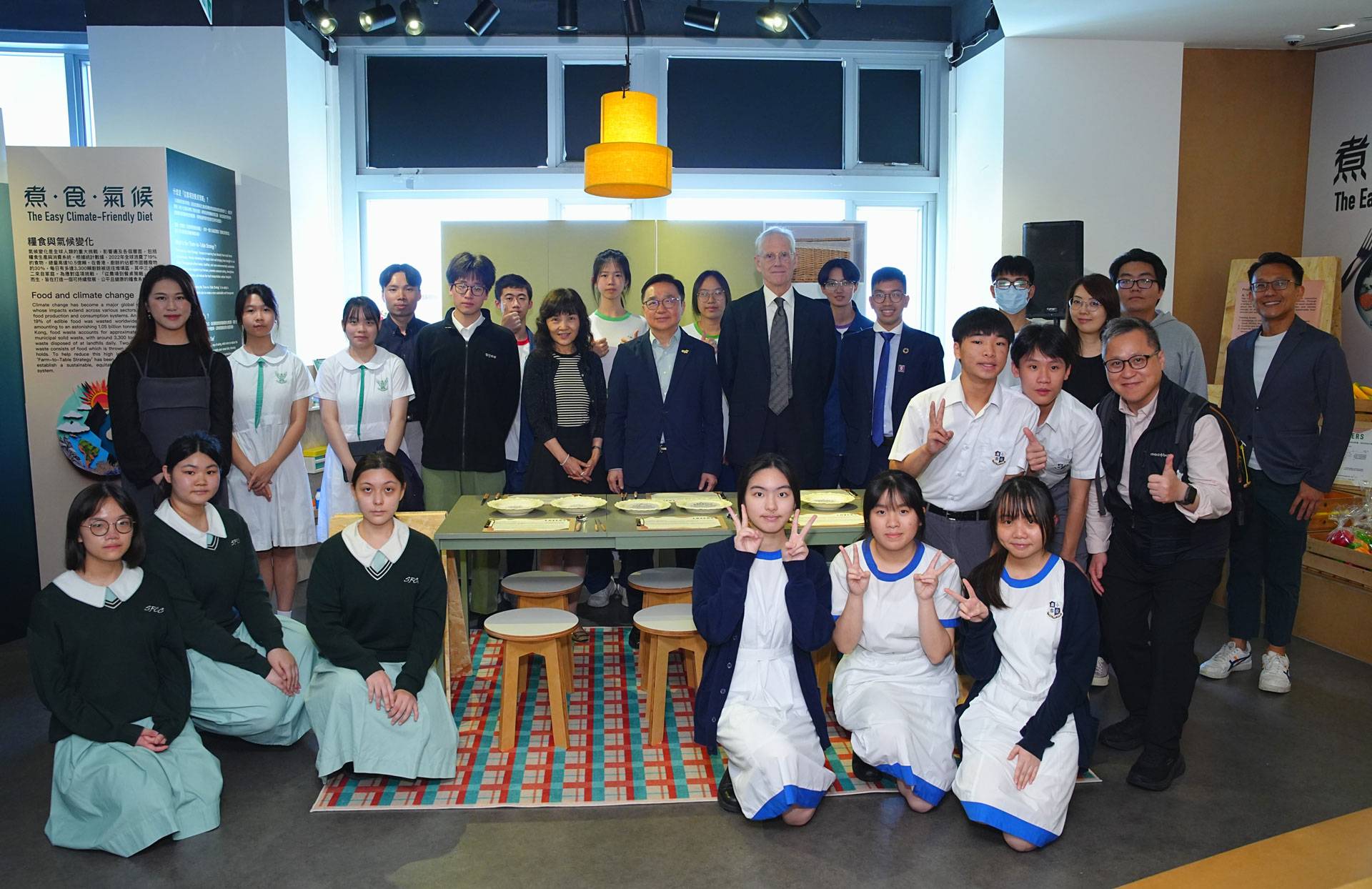
From April to July 2025, MoCC hosted the Environment and Conservation Fund’s ‘Easy Climate-Friendly Diet’ Exhibition. This exhibition focused on the connections between food and climate change, with the aim of encouraging the Hong Kong community to achieve carbon neutrality through low-carbon diets. It showcased the outcomes of Environment and Conservation Fund ‘Easy Climate-Friendly Diet’, a 24-month community engagement project supported by the Environment and Conservation Fund of the HKSAR Government. The exhibition, which sought to persuade visitors to adopt climate-friendly lifestyles, featured climate-friendly recipes created by 46 ‘Young Climate Chefs’ from 10 participating secondary schools, and introduced the ‘Farm-to-Table Strategy’ and principles for practising a climate-friendly diet.
In October 2025, the MoCC joined the Culture for the Planet Alliance as a founding member. Other founding members included M+, Tate Modern, and ICOM SUSTAIN. Powered by studies from the University of Lausanne (UNIL) Department of Geography and Sustainability and Zurich University of Applied Sciences (ZHAW) Center for Arts Management, the alliance is a global community that works with arts and cultural organizations, policymakers, funders and associations to foster transformative action for sustainability in the arts and culture sectors. It aims to empower arts and cultural organizations to take meaningful action towards sustainability and to inspire others to support this goal.